
Reishi
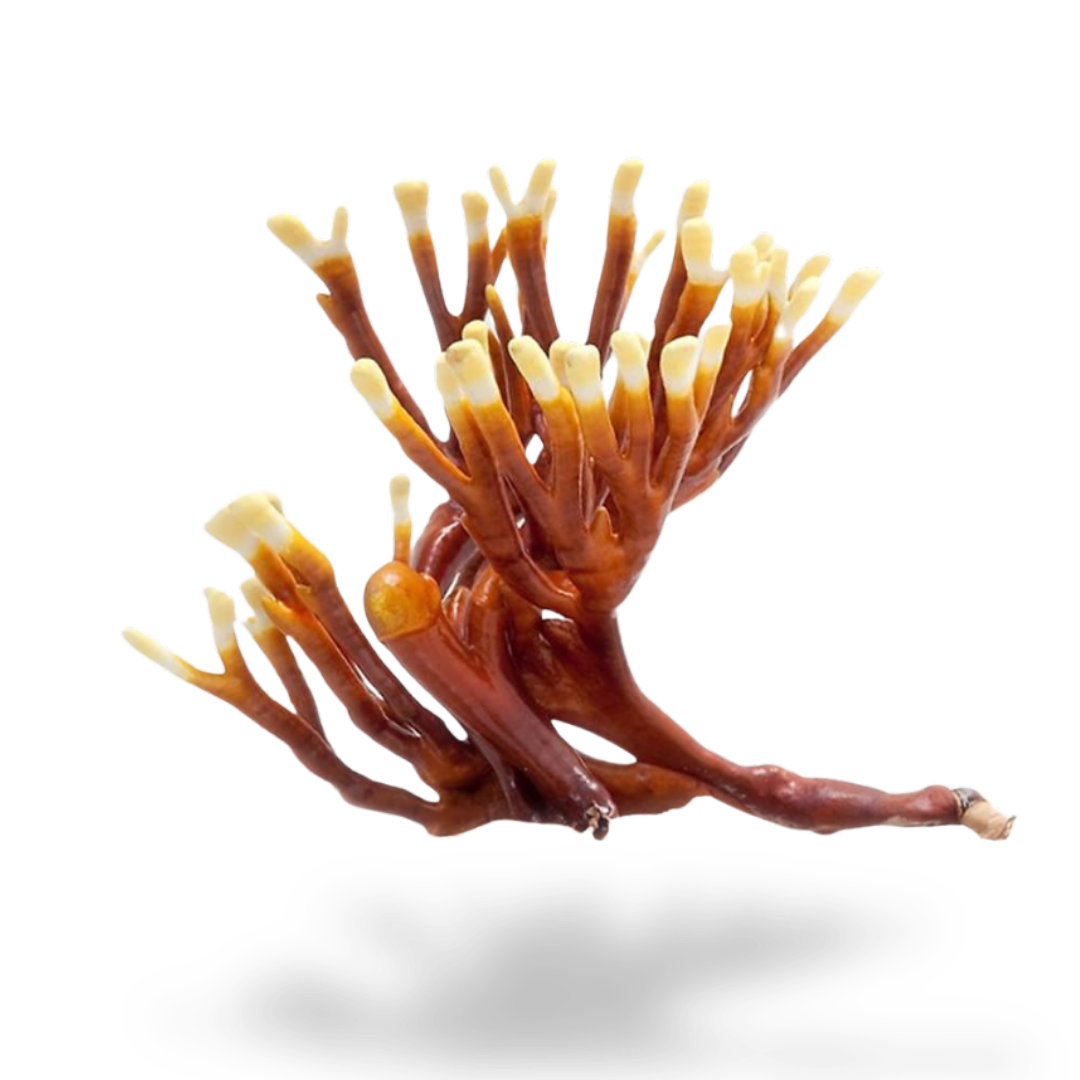
Reishi (Lingzhi) has been revered in traditional medicine for over 2,000 years, and modern consumer demand for functional mushrooms has made it a viable commercial crop. Our Ganoderma multipileum strain produces the classic lacquered, kidney-shaped conks with a stunning reddish-brown finish. While Reishi is not a culinary mushroom (it's too bitter and woody to eat fresh), it's processed into teas, tinctures, powders, and supplements. The cultivation is straightforward — warm temperatures, top fruiting, and patience — making it an excellent add-on for farms already growing gourmet varieties who want to tap into the booming functional mushroom market.
Cultivation Tips for Reishi
Top fruit by cutting a small opening in the top of the bag. Reishi will send up antler-like growth first, then form conks.
Warm temperatures (68–80°F) and high humidity (85–95%) throughout the entire cycle. Reishi is a tropical species.
Patience is key — full conk development takes 30–60 days. The lacquered surface develops gradually.
Harvest when the white growing edge disappears and the entire surface has developed the glossy, lacquered appearance.
In the Kitchen
Culinary Profile
Reishi is not eaten as a culinary mushroom due to its bitter, woody nature. Instead, it's processed into teas, tinctures, extracts, and powders for the functional mushroom and supplement market. Dried Reishi slices can be simmered into a traditional medicinal tea.
Frequently Asked Questions
Can you eat Reishi fresh?
How is Reishi processed after harvest?
Is there a market for Reishi?
Ready to Grow Reishi?
Get in touch for pricing, availability, or to add Reishi to your standing order.
Contact Us