
SHIITAKE
COUNTERTOP KIT
INSTRUCTIONS
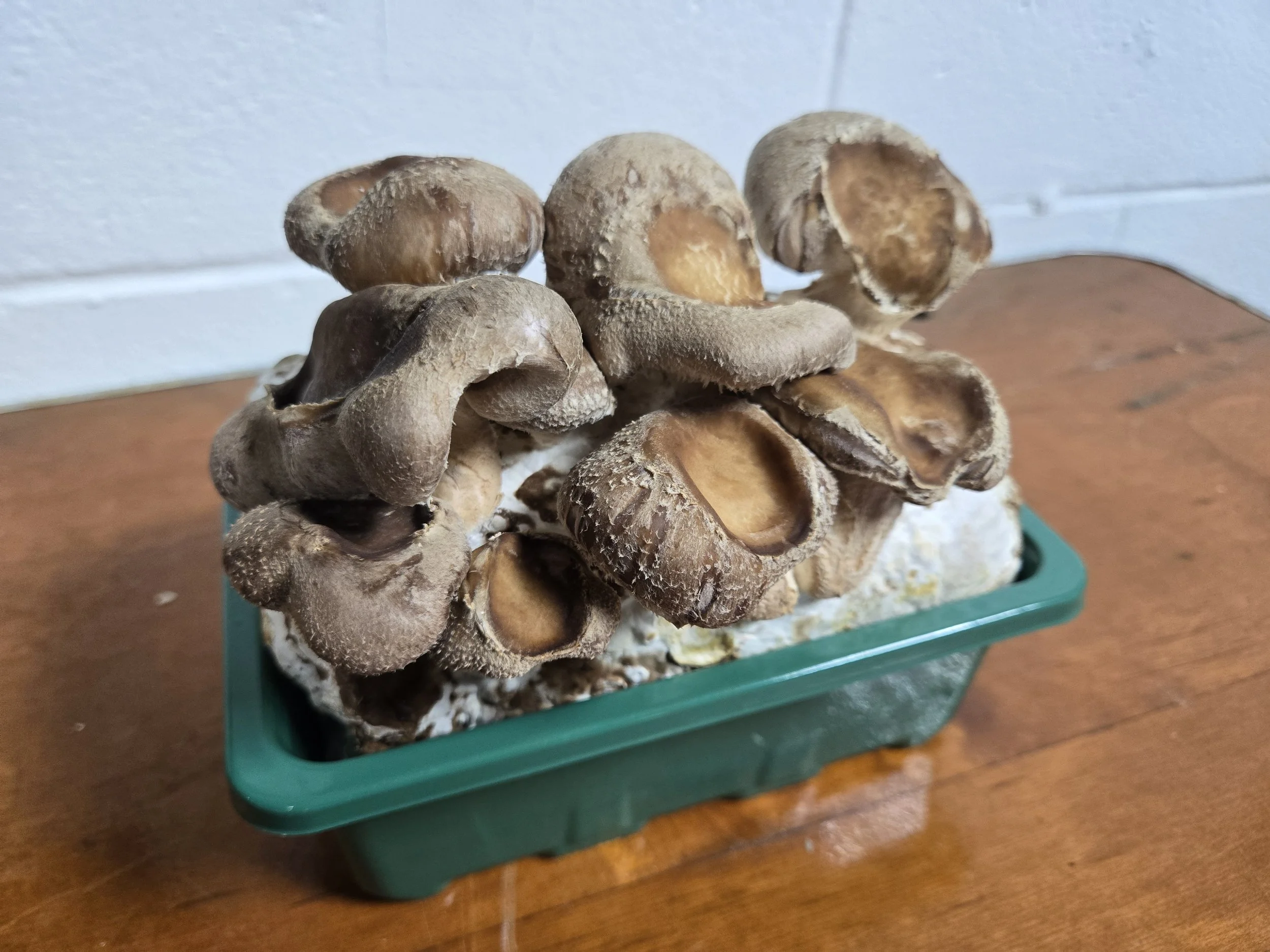
Growing Your Shiitakes
Find an area with indirect sunlight and gentle, indirect airflow. Avoid placing your block near direct heat sources or air conditioning vents.
Remove the shiitake block from the green tray and humidity dome.
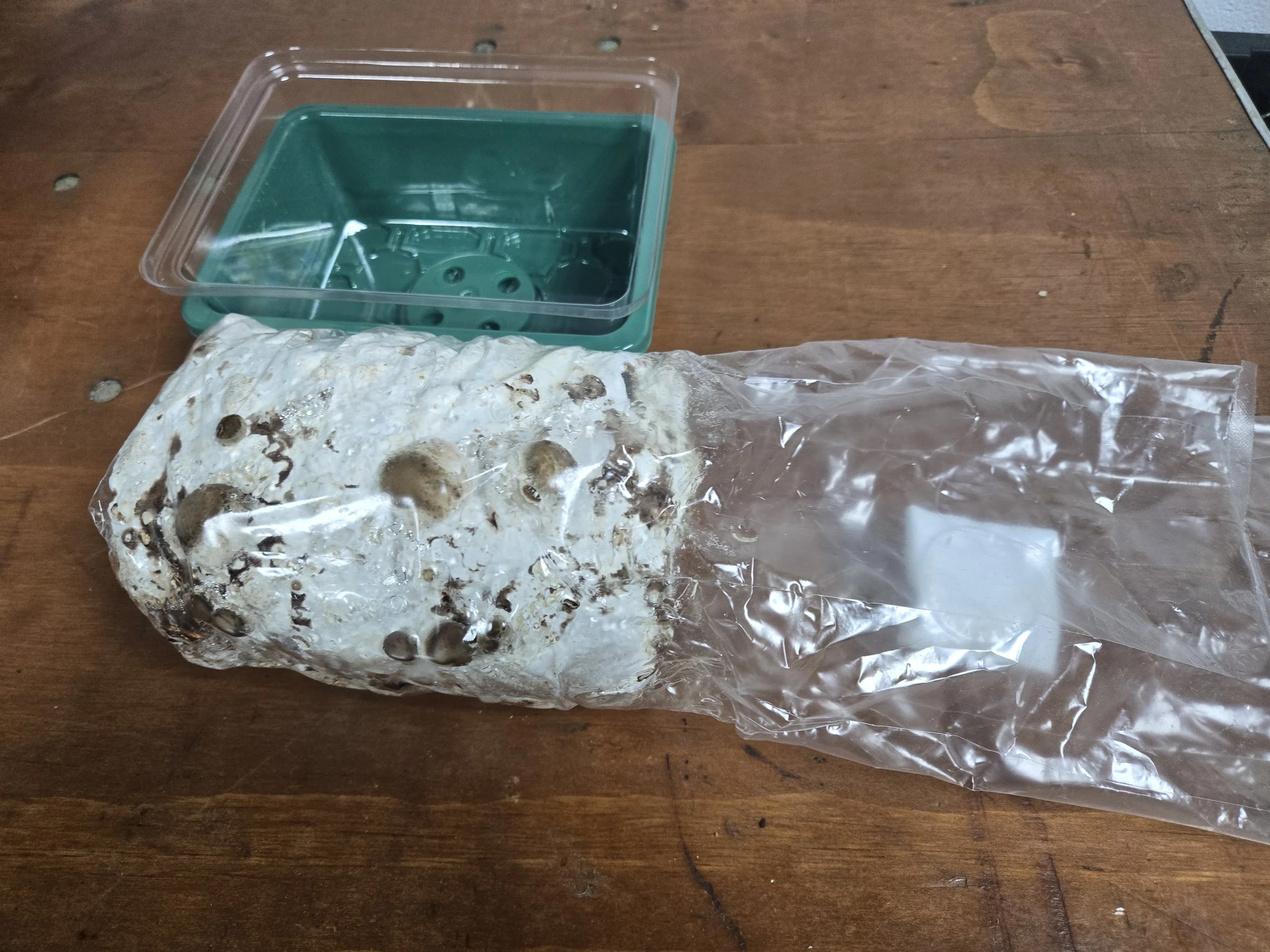
Using scissors or a sharp knife, cut the top of the bag off — just above the top of the block. Fill the bag above the block with cool water so the top surface of the block is submerged. Let the block soak overnight (8–12 hours). This cold soak shocks the mycelium into fruiting.
After soaking, carefully pour off the excess water.
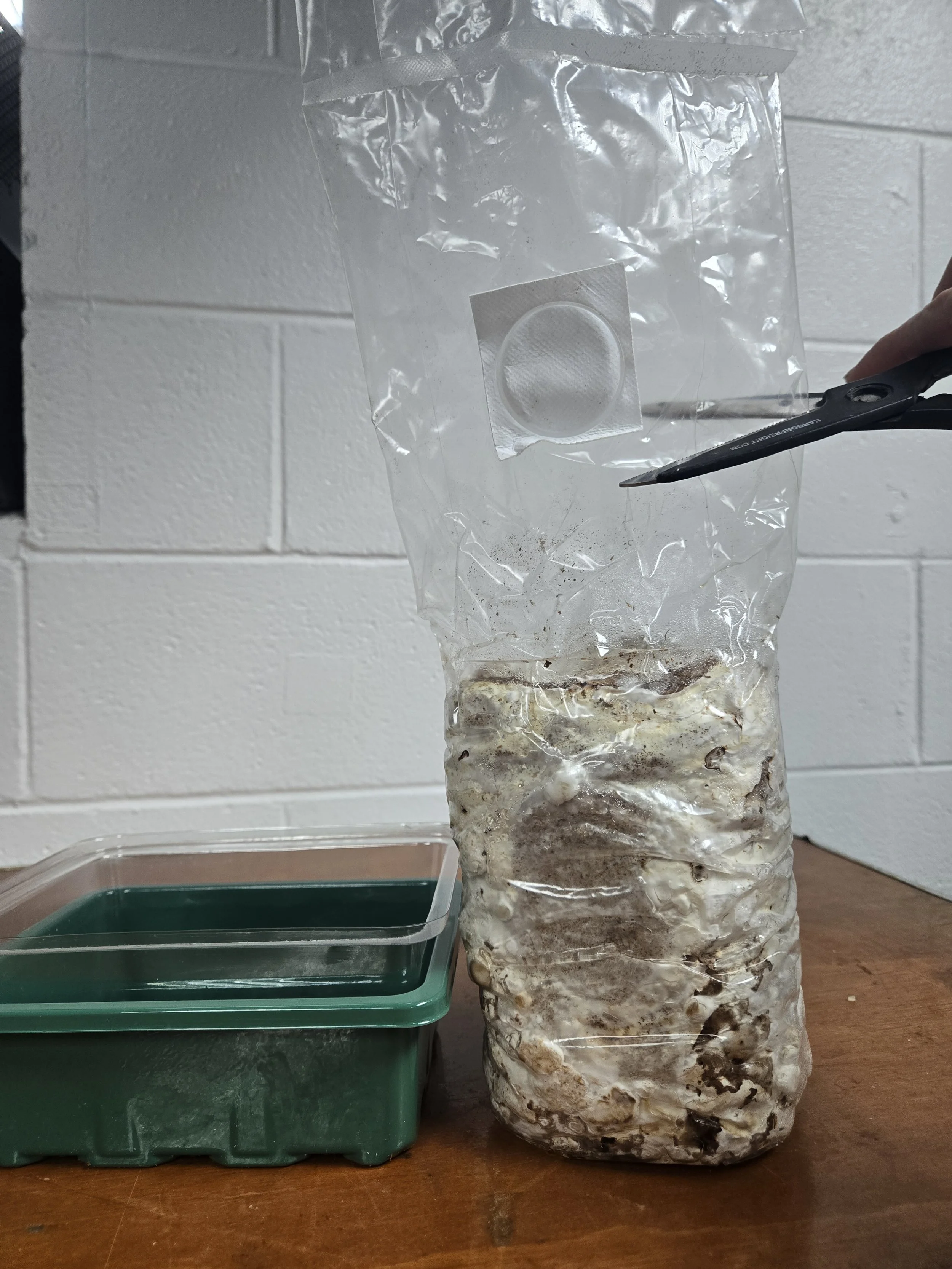
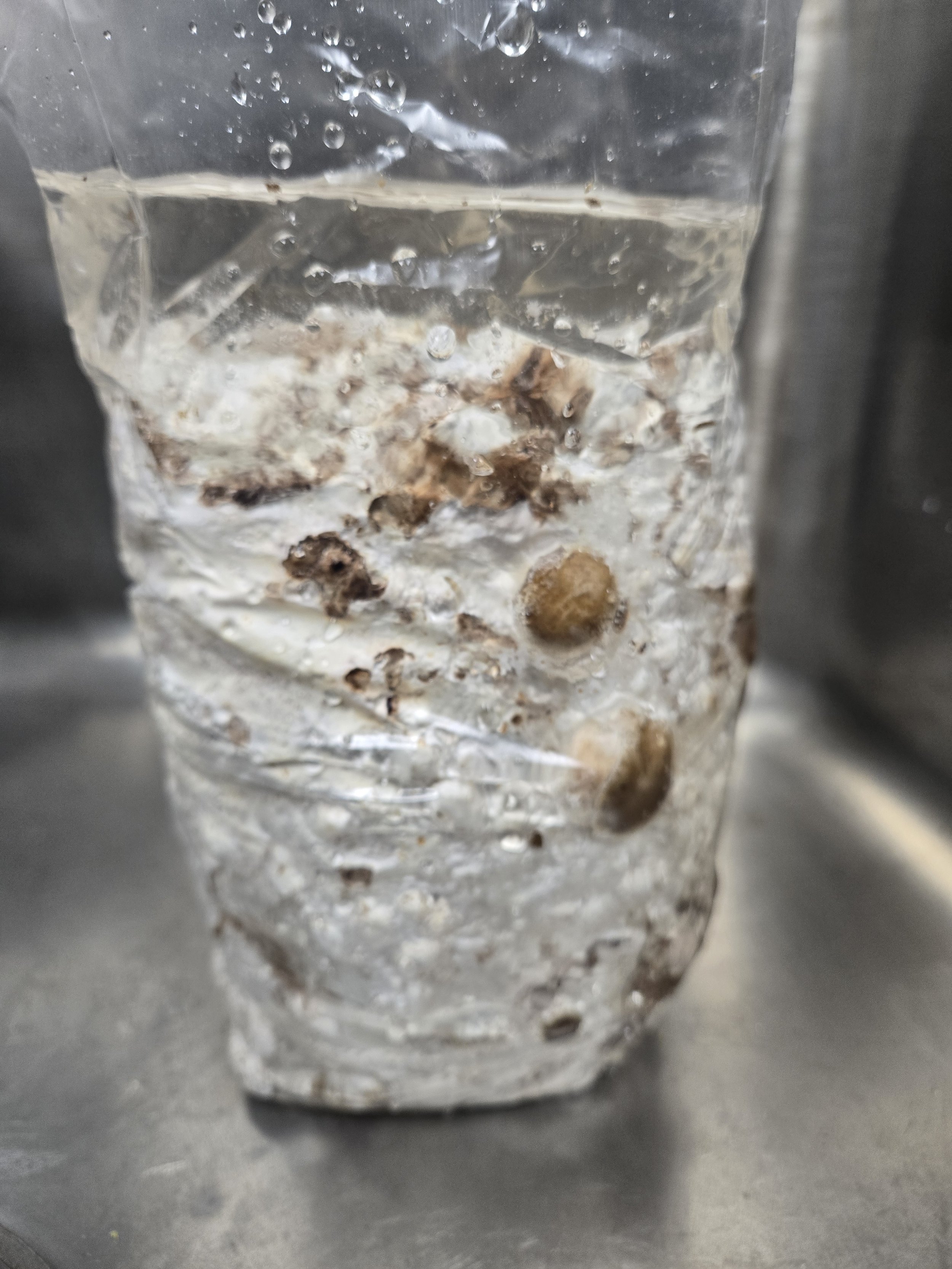
After draining the soak water, completely remove the block from the bag. Place the bare block back in the green tray.
Place the humidity dome over the green tray and block. Make sure all 4 vent holes on top are completely open. Mist the inside of the humidity dome so that it's completely covered in condensation.
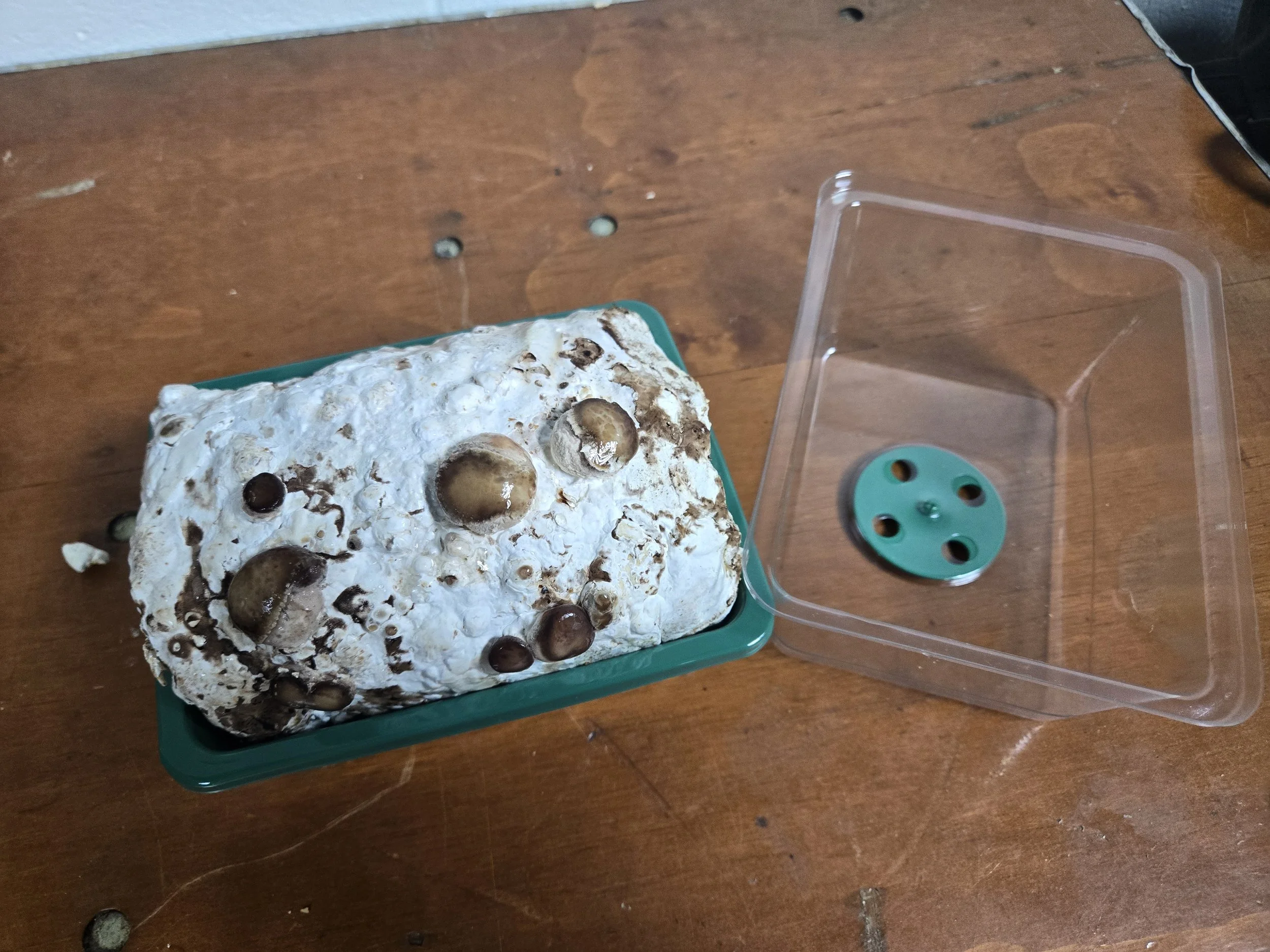
Your Shiitakes should begin pinning (the first signs of growth) within 7 to 14 days after the cold soak. You'll see small brown bumps forming on the surface of the block. Once your mushrooms begin to grow, remove the humidity dome for the rest of the grow. If your home is especially dry, ease the transition by removing the dome during the day and leaving it on at night for 1 to 2 days.
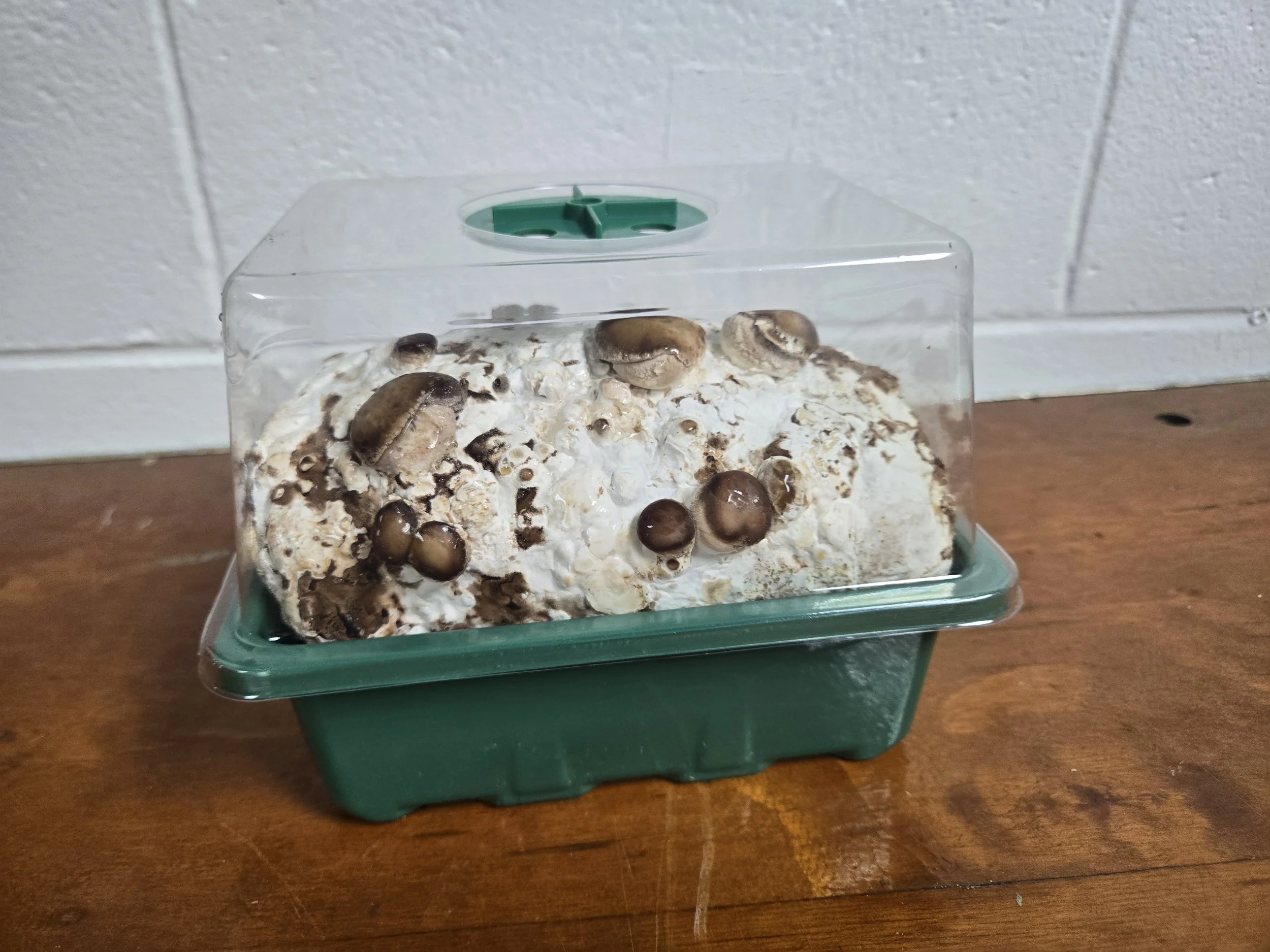
Mist the inside of the humidity dome 2 to 3 times daily. You want to keep a layer of condensation on the inside of the dome at all times.
Once the dome is off, mist your growing Shiitakes directly 2 to 3 times daily.
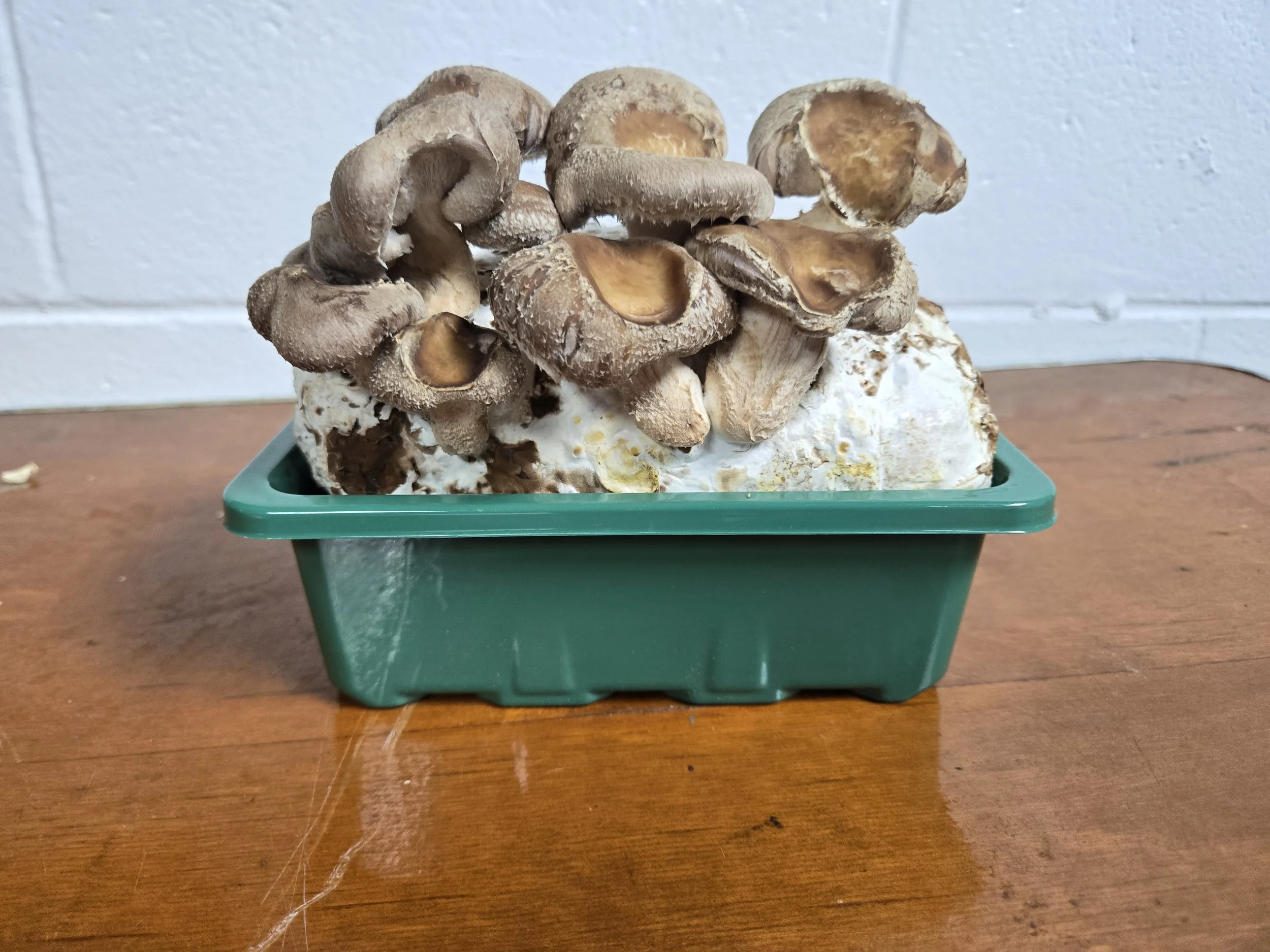
Shiitakes are ready to harvest when the caps have opened up and flattened but are still slightly rounded — you want to catch them before the caps go fully flat. The edges of the cap will still be slightly curled under. Gently twist individual mushrooms or cut them at the base with a sharp knife.
Shiitakes tend to grow in smaller clusters or individually rather than the large bunches you see with oysters.
Store your fresh Shiitakes in a paper bag in the refrigerator for up to 10 days. Shiitakes have a longer shelf life than most fresh mushrooms. Always wash and cook your mushrooms before eating.
Shiitakes are great for multiple flushes. After your first harvest, let the block rest for 1 to 2 weeks. Then repeat the cold water soak — submerge the bare block in cool water overnight. Place it back in the tray, dome on, and start misting again. You can often get 2 to 4 flushes from a single block.
Frequently Asked Questions
How do I know when Shiitakes are ready to harvest?
Shiitakes are ready to harvest when the caps have opened and flattened but still have a slight curve — the edges should still be slightly rolled under. Don't wait until the caps go fully flat.
How do I harvest Shiitakes?
Gently twist your mushrooms from the base to harvest, or cut at the base with a sharp knife. All mushrooms should be washed and cooked before consumption.
Why is the cold water soak important?
The cold water soak is essential for Shiitakes — it triggers fruiting. Don't skip it. Submerge the block in cold water (40–50°F) for 8–12 hours before starting. Re-soak between flushes for consistent results.
Why do I remove the entire bag for Shiitakes?
The bag comes off completely for Shiitakes, unlike oyster and Lion's Mane kits. Shiitake naturally fruits from all surfaces, so removing the bag exposes the entire surface and maximizes yield.
My block has a bumpy, popcorn-like texture. Is that normal?
Shiitake blocks often develop a bumpy, popcorn-like texture on the surface as the mycelium matures. This is completely normal and is actually a sign that the block is ready to fruit.
How do I get a second or third flush?
For second and third flushes, let the block rest 1–2 weeks between harvests, then re-soak overnight in cool water. You can often get 2 to 4 flushes from a single block.
What temperature do Shiitakes prefer?
Shiitakes fruit best at 60–75°F. If your home is warmer, try a cooler spot. Avoid placing your block near direct heat or air conditioning.
Where can I learn more?
Check out our Strain Catalog page for variety-specific information. You can also read our blog post on what to do with your block after it's done fruiting, or visit our FAQ page for even more information.
Keep Growing
Loved your Shiitakes? We grow kits for a bunch of different varieties — Blue Oyster, Pink Oyster, Lion's Mane, Chestnut, and more. Each one grows a little differently and tastes completely unique.
Shop All Grow KitsStay in the loop — follow us for growing tips, new products, and behind-the-scenes looks at the lab.